ENVIRONMENT
OMA demonstrates a steadfast commitment to environmental protection and preservation. Our management approach is preventive and aims to implement strategic plans that effectively mitigate and offset the impacts generated by our airport activities and associated businesses.
Our 13 airports have been awarded the PROFEPA Environmental Quality Certificate and achieved Level 3 “Optimization” accreditation under the Airport Carbon Accreditation Program (“ACA”) granted by ACI-LAC. In addition, during 2024 and for 2 consecutive years, OMA obtained ISO 14064 certification, an international standard that establishes requirements for the quantification, reporting and verification of greenhouse gas emissions.
ENVIRONMENTAL IMPACT
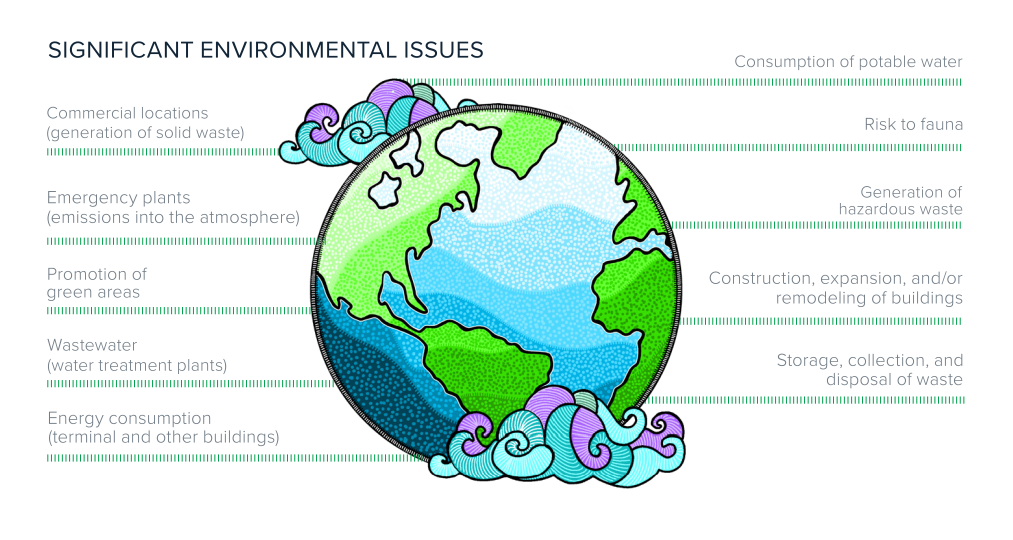
ENERGY CONSUMPTION
The Company’s energy requirements arise mainly from electricity consumption, which is used for lightning and air conditioning at airports, and to a lesser extent, the use of fuels such as gasoline, diesel, natural gas, and LP gas used in construction machinery and vehicle transportation.
In 2024, approximately 95% of our electricity consumption came from clean sources.
0
%
electricity consumption
came from clean sources
CO2 EMISSIONS PER PASSENGER
KgCO2 e/PAX (Scope 1 and 2 emissions)
2018
BASE YEAR
BASE YEAR
1.53
2021
0.24
2022
0.10
2023
0.08
2024
0.12
2025
OBJECTIVE
OBJECTIVE
0.65

EMISSIONS
OMA is committed to reducing green-house gas emissions, as reflected in its defined goals and annual investments, which contribute to enhancing the efficiency of our airports.
In 2024, OMA generated emissions totaling 3,066.96 tons of CO2equivalent (tCO2 e). Scope 1 emissions were 1,443.86 tCO2e, representing 47.1% of the total, while Scope 2 emissions were 1,623.10 tCO2e, representing 52.9%.
WASTE MANAGEMENT
One of the pillars of OMA’s environmental management system is the correct disposal of waste generated by airport operations, and by their various secondary activities. For this purpose, a series of guidelines have been established that are focused on identifying, storing, transporting, and disposing of waste, in compliance with applicable Mexican standards.
In 2024, our airports produced a total of 2,508.10 tons of waste, of which 4.24 tons corresponded to hazardous waste and 2,503.86 tons to non-hazardous waste.
HAZARDOUS WASTE
Hazardous waste refers to waste that exhibits characteristics such as corrosiveness, reactivity, explosiveness, toxicity, inflammability, or contains infectious agents, rendering it hazardous. This classification also encompasses waste such as containers, recipients, packages, and soil that become contaminated during the transfer to another site or are listed in accordance with NOM-052-SEMARNAT regulations.
At the airports, hazardous waste is generated from the following activities:
- Airport operation activities.
- Maintenance-related tasks.
- Storage of aerosols at airport inspection points, excluding their presence in sterile areas of aerodromes. If carried through passenger-inspection points.
NON-HAZARDOUS WASTE
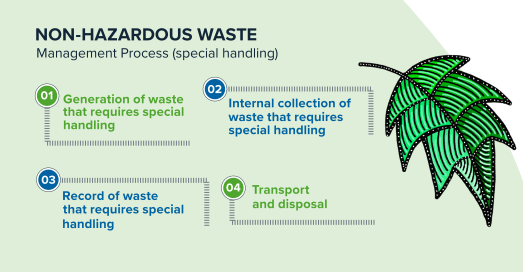
Our Company’s operations generate non-hazardous waste (special handling) from complementary and commercial airport services, such as: common waste, inorganic and organic waste, paper, cardboard, PET, aluminum, and garden waste, among others. Each airport classifies and segregates waste in compliance with state ecological ordinances. The management cycle is as follows:

RESPONSIBLE WATER CONSUMPTION
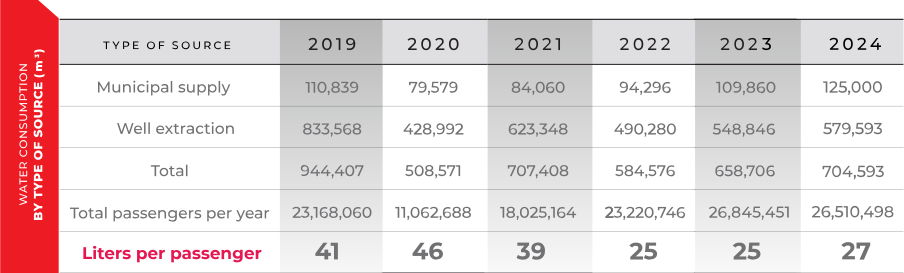
Water is a critical aspect of airport operations, serving as an indispensable resource for providing services to our clients and passengers. At OMA, we prioritize the rational and responsible use of water to minimize consumption, considering the ongoing challenge of accommodating increasing passenger numbers and expanding infrastructure.
Thanks to the Company's strategy focused on water conservation, in 2024, we achieved a consumption of 27 liters per passenger.
To fulfill our commitment to responsible water consumption, we have implemented a range of measures, including:
- Installation of water treatment plants at our 13 airports.
- Analysis of processes to identify opportunities for reducing water consumption.
- Replacement of conventional equipment for eco-efficient alternatives.
- Installation of shut-off valves to prevent wastage.
- Regular inspection of pipes to detect and address any leaks.
- Calibration of bathroom fixtures to ensure efficient water use.
- Incorporation of presence sensors and automatic shut-off taps in restrooms.
- Implementation of water flow sensors to monitor usage.
- Reuse of treated water for irrigation purposes in green zones.
- Flowmeter sensors.
- Reuse of treated water for irrigation purposes in green zones.
- Water conservation awareness programs.
- Maintenance of facilities.
- Implement smart monitoring system to monitor water consumption and cycle.

BIODIVERSITY
The environmental challenges being faced globally require the commitment of all members of society to mitigate impacts and to preserve resources for these and future generations. Therefore, at OMA we have implemented strategies that seek to protect the biodiversity that exists in the areas surrounding the Group’s airports.
One example of our commitment to biodiversity is the establishment of the Management Unit for the Conservation and Sustainable Use of Wildlife (UMA) at the Zihuatanejo airport (as a type of nursery), with the following objectives:
- Reforest buttonwood mangrove.
- Contribute to regenerating coastal lagoon ecosystems.
- Raise awareness about the importance of mangroves.
